


☝️This should NOT have worked.
When Reculture was asked to create a music video directing third through fifth graders to call 988, the suicide prevention lifeline, the first thing out of my mouth was:
“There’s no way we can pull that off.”
Not with our characters Crumb and Unk, an uptight alien and his goofy robot friend. Not with that age group. Not with that topic.
But John, my creative partner, reached his hand out, looked at me, and said, “Hold on a minute.”
And thank God for “Hold on a minute.”
Because what followed was one of the most surprising creative breakthroughs I’ve been part of in a long time. It taught me, again, what all great messages have in common:
They meet people where they are.
Even if “where they are” is fourth grade.
The Simplicity Ceiling
Most people think smart messages are supposed to sound smart.
But the best ones sound simple.
Think about “Just do it,” “You’re not you when you’re hungry,” or “Think different.”
We don’t process messages with a red pen; we process them with our nervous system. And our nervous systems love simplicity.
I’m not saying this is ideal, but the average American reads at about a seventh-to eighth-grade level. On top of that, studies show that when we’re under stress, we tend to revert to simpler language processing. In short, when we’re overwhelmed, distracted, or emotional (so, always), we reach for what’s easy to digest.
Which means if your message only makes sense to a C-suite, Ph.D., or policy wonk, it might be smart…but probably not very effective.
Crumb, Unk, and the 988 Challenge
Back to the project.
The ask was clear but daunting: Make a song that tells 8-to-11-year-olds that 988 is the number to call if they, or a friend, are struggling.
At first, I balked. I didn’t even realize that kids that young struggled with suicidal thoughts. But the data says they do. And once that sobering truth settled in, it made the challenge feel all the more important.
We went to work.
We knew the sensitive directives we had to communicate.
But we started the way we always do: with story, with characters, with hope. We refused to make this thing feel like a downer. Instead, we wanted to ground it in positive feelings like joy, courage, and—dare I say—even a little fun. We teamed up with friend & music producer Chris Cron, and together…
We made the message so simple a fourth grader could understand it.
Because that was literally the point.
But also, maybe, because all of us need it that simple, too.
How to Communicate on a Fourth Grade Level (Without Sounding Like a Fourth Grader)
Here are a few handholds I learned from projects like this that I trust are helpful to you too.
1. Bake the veggies in the mac & cheese.
Kids don’t need five bullet points to pay attention, they need a reason to care. Adults are no different. Joy. Curiosity. Fear. Surprise. Humor. Offer those things up first…the things we all naturally get excited about. Bake the more substantial stuff inside.
2. Don’t confuse gravity with heaviness.
Just because a message is powerful (like gravity) doesn’t mean it automatically has to feel heavy. The more important we feel a message is, the more likely we are to weigh it down in one way or another. Resist that urge and see what happens.
3. Talking down doesn’t work. Bending down does.
When Yo-Yo Ma was seven years old, he played for Presidents Kennedy, Eisenhower, and a room full of other famous people praising the young boy with platitudes and pats on the head. But the person he remembers the most? The actor Danny Kaye (White Christmas, Hans Christian Andersen). Why? Here’s what Ma says:
“He came down to my level in order to be an equal. He extended himself, met me at the crucial edge that divides adult from child, and won my heart. I subliminally internalized that gesture and that attitude, and I’ve tried to be mindful of this in everything I do—to meet people at eye level, at the edge that divides one person from another.”
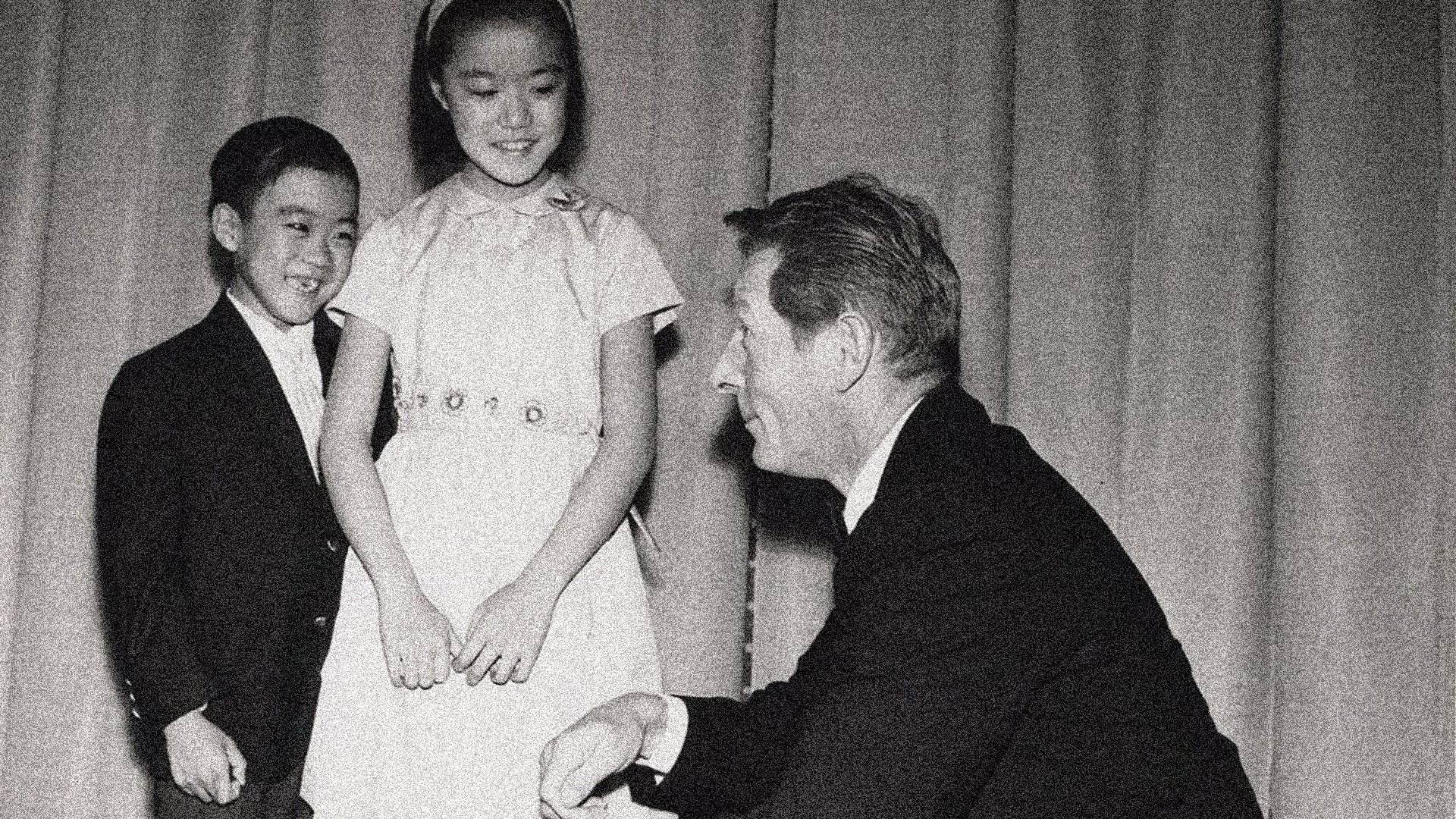
There’s a subtle difference between talking to people and talking with them. I’ve found that subtle difference often leads to paradigm-shifting results.
If we can bend down, if we can lean into gravity without always succumbing to our own heaviness, if a fourth grader can get what we’re saying, everyone else has a fighting chance too.