


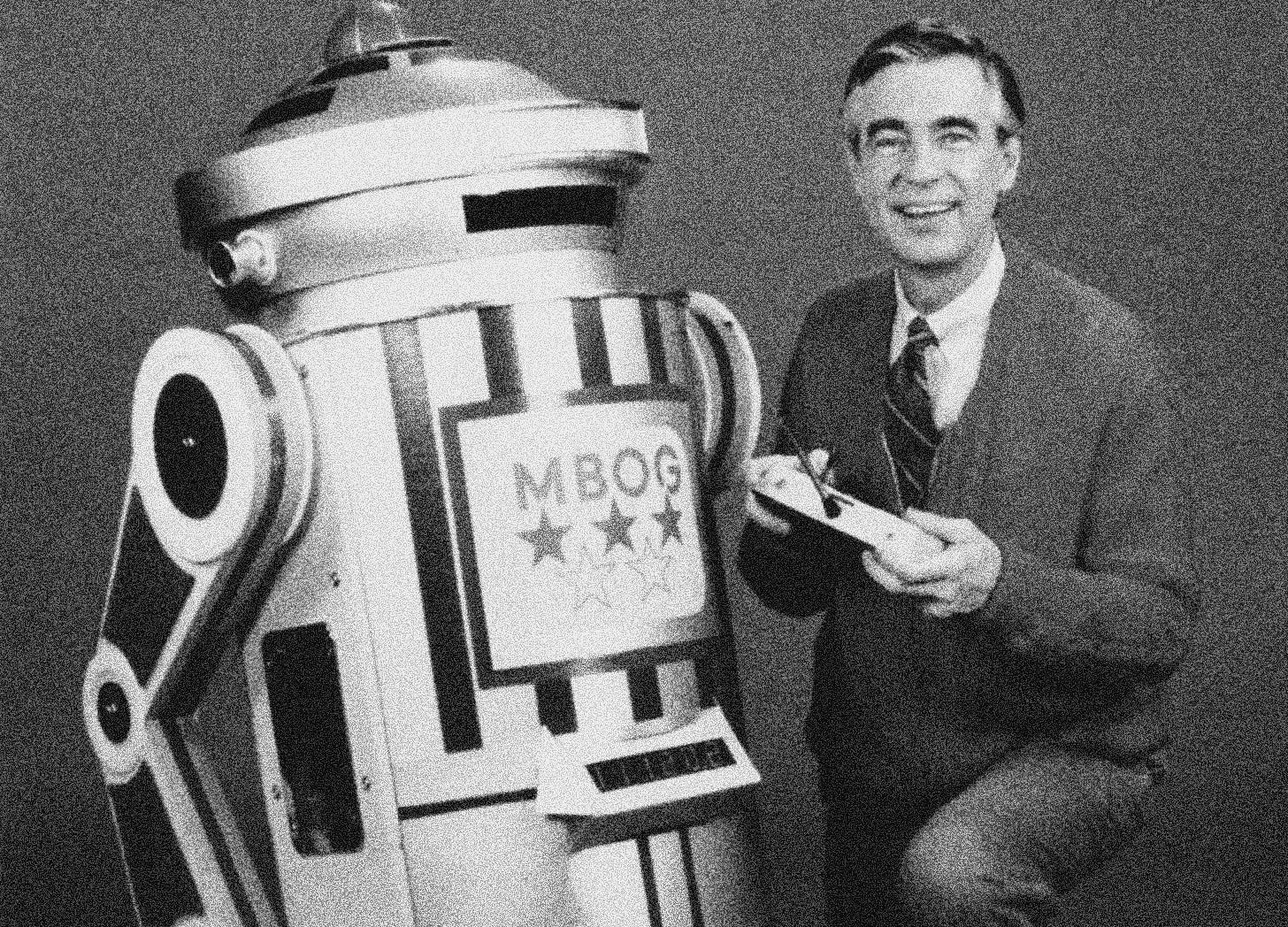
"It’s such a good feeling to know you’re alive." — Mr. Rogers
“Our new CMO just said, ‘We need to move away from emotional branding.’”
A friend of mine, who runs social media for a mid-market consumer brand, told me this over the phone the other day.
“Like…what does that even mean?” he asked.
“I have no idea,” I replied. “Did he give any additional context?”
“No, not really. I probably should have asked, but I was so confused I just froze.”
We both stood there, our phones held up to our ears, thinking in silence, “What kind of bizarro world are we in now?”
So this is where we are: In a weird economy overrun with AI bots, where the new marketing guy comes in trying to prove his pay grade by saying things like, “let’s cut the emotion out of branding”… as if branding could ever be anything but emotional.
If you’re a smart, strategic, creative leader who’s also a little freaked out, I get you. Allow me to inject some hope.
I can’t tell you where AI is going (The experts don’t even seem to know). I’m not an economist (Apparently data is negotiable now anyway). What I can do is offer a prediction based on my own work for what the future holds when it comes to the relationship between creativity and commerce. One that’s challenging but hopeful…and if I’m right, just over the horizon. But first, another story.
Puppets & a Pub Table
The whole thing started as a side project, a kind of creative itch I needed to scratch. About six years ago I wondered what would happen if I took my skills as a media professional and applied them to kids. Not to consumer brands or political campaigns, but to children.
So I made a series of short videos. The stars were an alien and a robot puppet, which made sense because I grew up obsessed with Mr. Rogers and The Muppets. The mission was simple: teach kids urgent skills like kindness and creativity.
It worked. Sort of. The series won a couple of awards. It ended up in classrooms. It even gave my production company, Reculture, some unexpected visibility. But after three years I was worn out. Producing it was a lot. I remember sitting at our local watering hole with my friend John, who voiced one of the characters, and telling him I thought I was ready to move on.
Two weeks later my phone rang. A company that created social and emotional learning curriculum for schools wanted to license the videos and commission more. Suddenly this quirky side project I was ready to close the chapter on became one of Reculture’s largest clients.
Which is funny, because most people assume our main business is helping comms, marketing, and brand departments. And while that’s true, here we are also getting in pretty deep with an education company that exists to teach people how to be more human.
Art Isn’t Dead, It’s Displaced.
My puppet side hustle-turned-major focus might be a kind of signal flare for the future of creative work at large. If creativity still has a place in a world where machines are learning to write copy and generate graphics, maybe its most important place is not where we expected.
We all know creative belongs in marketing departments. That’s where the brainstorming happens, where clever slogans are born, where campaigns are designed to break through the noise. But marketing is also one of the first places AI has started to inch human creativity out.
A few years ago, the big consulting firms were already saying it: marketing was going to be one of the earliest business functions disrupted by AI. Gartner predicted that by 2025, 30 percent of outbound marketing messages from large organizations would be AI-generated. In case you missed it, that’s now. And if you’ve played with any of the new AI tools, you can see why. They can write email subject lines, produce graphics, and generate video.
For CMOs, this is efficiency. For creative professionals, it’s displacement. The same skills that once made you indispensable are suddenly being automated.
But while this kind of creative work is being displaced, another kind is being quietly elevated.
Art Is About to Look a Lot Less Like Social Media and a Lot More Like Social Work.
When a school system invests in social and emotional learning, it isn’t about efficiency. It’s about survival. Teachers have seen what happens when kids aren’t taught how to regulate their emotions or resolve conflicts. They struggle to learn, to connect, to thrive.
The same thing is now happening in the workplace. Companies are realizing that if people are going to work alongside AI, what matters most are the skills AI cannot provide…things like decency, kindness, civility, and patience.
For decades, the hierarchy was clear. Marketing got the best creative talent because marketing had the budget. HR was seen as administrative, focused on compliance, payroll, and annual reviews. If you were a designer or writer, you wanted to work on Super Bowl ads, not onboarding manuals.
But the hierarchy is shifting.
The Global Work Well-Being Report, developed in partnership with the University of Oxford, correlates high workplace well-being with better business outcomes. Companies ranking high in employee happiness, purpose, and belonging have outperformed major stock indices like the S&P 500 and Nasdaq.
These aren’t perks. More like survival strategies in a labor market where retention costs and burnout rates have become bottom-line issues.
And what does it take to create belonging? It takes story. It takes design. It takes people who can translate cold information and make it felt, creating experiences that make people feel connected to each other and to a shared purpose.
In other words, it takes creative professionals.
I think it’s possible that the next great arena for art and creativity may not be designing ads for consumers, but shaping experiences for workers, crafting the very stories institutions tell themselves about who they are and how they want to treat one another.
If the past two decades were defined by customer experience, the next decade will be defined by employee experience. McKinsey recently noted that companies investing in employee experience see higher productivity, stronger retention, and greater resilience during crises.
Soon, the challenge won’t be posting content for social media. It will be creating conditions where people remember not to treat one another like the robots they work with. Where the daily rhythm of work still leaves room for dignity, care, and even wonder. This, as we know, has always been art’s pendulum swing…from cultural catalyst to commercial commodity and back again. The only thing that changes is how advanced the robots are.
Culture Is the New Competitive Landscape.
The new competition is for culture. Companies that figure out how to build trust, belonging, and resilience internally will outperform the ones that don’t. Gallup has found that highly engaged teams show 23 percent greater profitability compared with disengaged teams. That’s not because of better ad campaigns. That’s because of better human connection.
And no, this may not be the stuff most creatives dreamt about when they entered the field. It isn’t likely to win a Cannes Lion. But it may be the most consequential creative work of our time.
Because as AI takes over more of the mechanics of communication, the job of humans will be to design the moments that machines cannot. The moments that remind us we’re more than robots.
That is the open water.
Which means the opportunity for creative professionals is actually expanding, not shrinking. It’s moving out of the advertising agency and into the HR department. Out of the consumer campaign and into the culture campaign. Out of what we used to call branding, and into something more like belonging.
Executives who see this shift will get ahead of the curve. They will invest in storytelling, design, and art not just to attract customers, but to sustain culture. They will understand that teaching emotional literacy and human connection is as valuable to their bottom line as the next viral campaign.
This is not theory. It is already happening. And soon, institutions in every industry will face the same reality. And the leaders who invite creatives into the heart of their culture will be the ones who build ones that last.