


History is full of messages that try to change behavior. Most start the same way: with Force.
The blunt instrument of empire, propaganda, parental guilt trips. Force gets results—at first. But it breeds its own resistance. Eventually, other messengers learn how to co-opt Force’s shadow: Fear.
Fear is sticky. It gathers crowds. But it divides just as fast as it unites. It needs a villain. It demands a scapegoat. And when your movement requires a monster to survive, the market share is never as big as it could be. That’s when Hope enters.
Hope is beautiful. It doesn’t need an enemy. It lifts instead of lashing. It’s scalable. But hope, too, is fragile. When it’s not followed up with real change—when the journey to the promised land feels like a never ending Spirit flight —Hope gives way to Disappointment.
And Disappointment doesn’t stay quiet. It gets loud. It gets creative. It rebels, it trolls, it tweets. It doesn’t want to build. It wants to burn.
Which brings us back to Force...
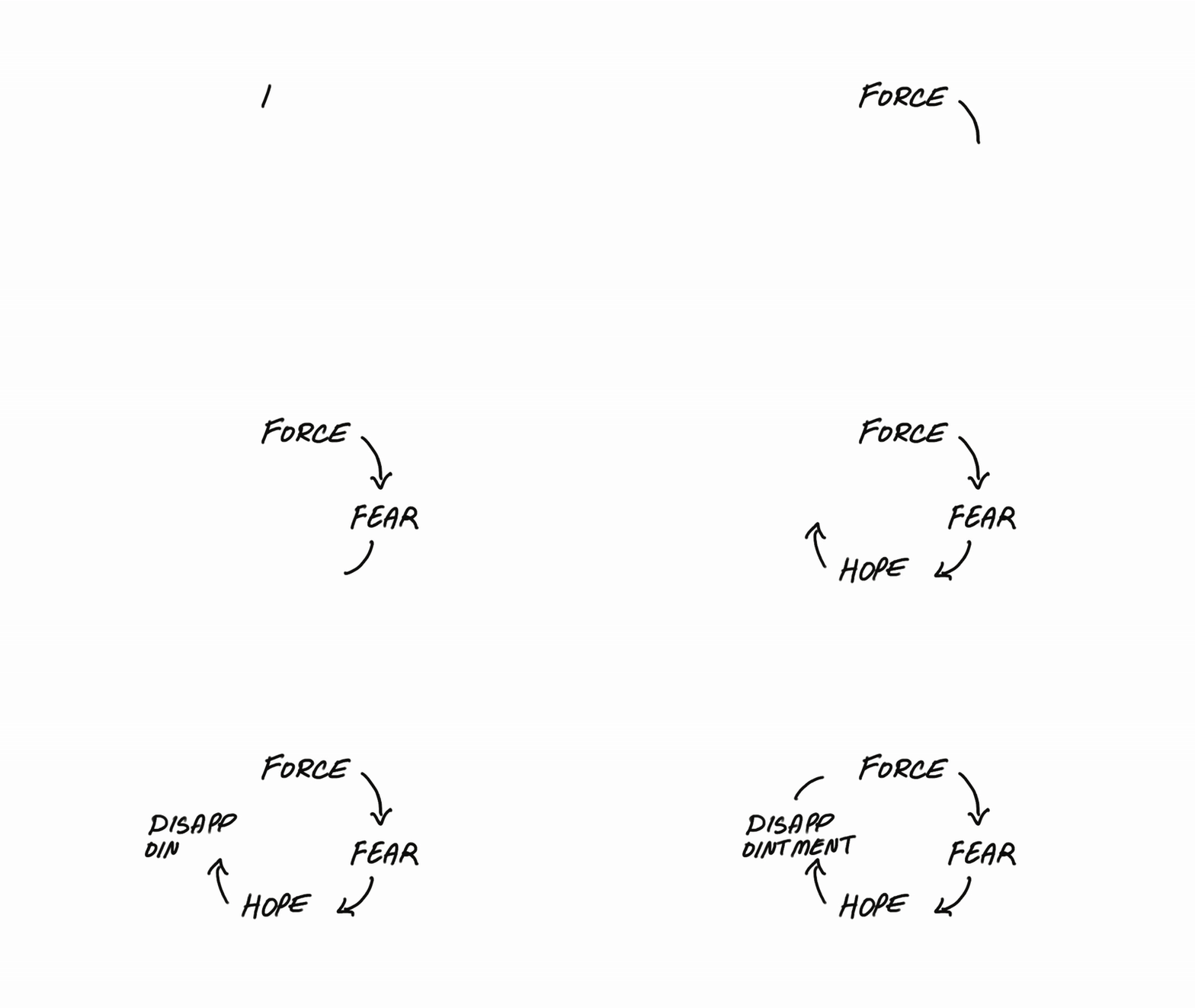
...unless something else interrupts the cycle.
That something is Trust.
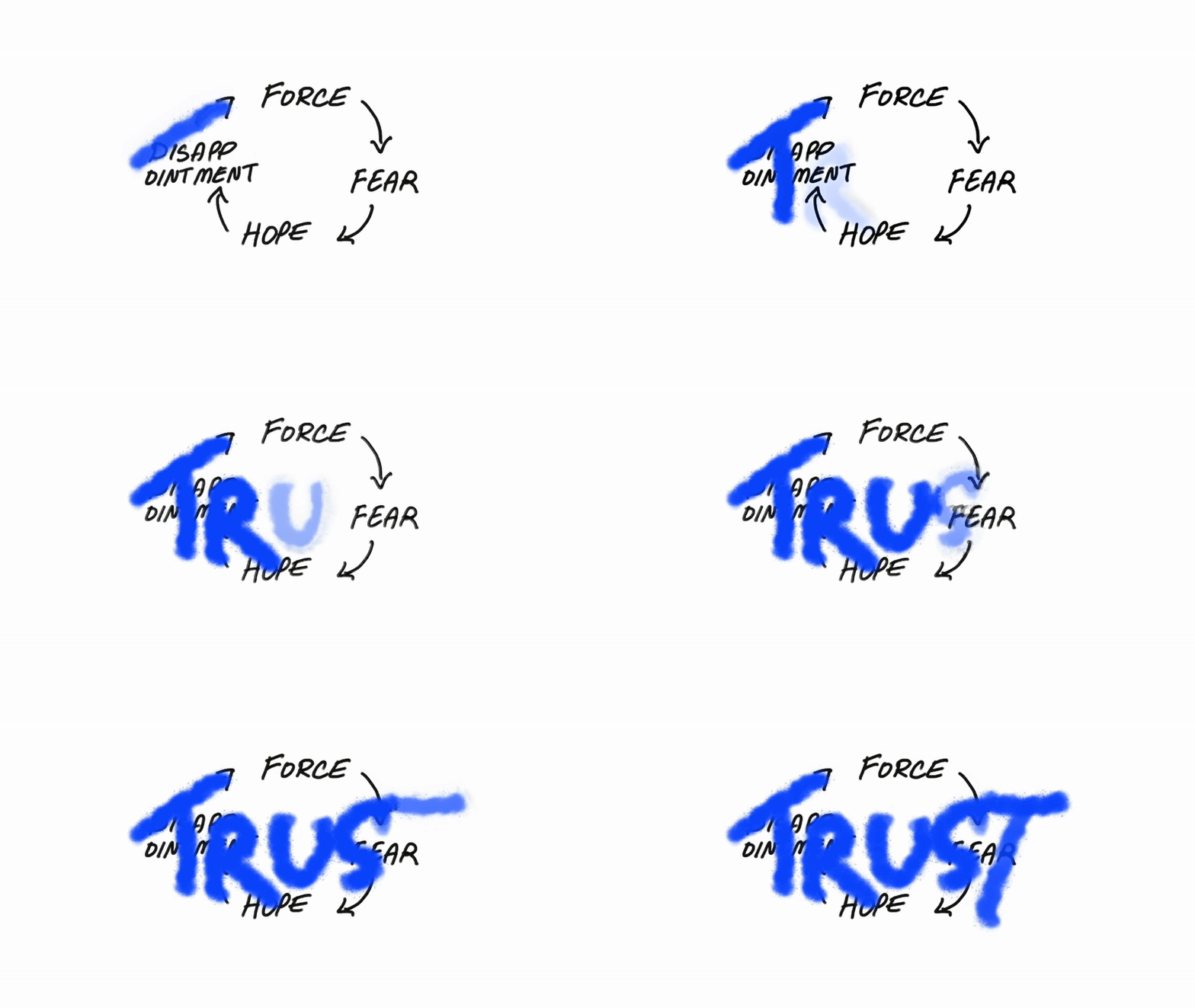
Not the kind you try to garner by pulling Beyoncé out of a hat every election cycle or calling a Kardashian for your next brand activation. The kind you earn over time. The kind that comes when when you treat people like neighbors before you divvy them up in a pie chart.
Sociologists call it social trust—the glue that holds a society together when the rebrand didn’t fix it or the politics failed to deliver.
The OECD calls it the “cornerstone of democratic legitimacy.” Research from Harvard’s Trust & Belonging Initiative and related studies has shown that higher levels of social trust are linked to stronger economies, healthier populations, and more resilient institutions.
It’s why the World Happiness Report consistently finds the most trusting countries—places like Finland, Denmark, the Netherlands—also report the highest wellbeing and the lowest levels of corruption.
Where trust is high:
Disagreement doesn’t default to division.
Fear has fewer votes.
Hope doesn’t have to carry everything on its back.
And where trust is low?
The cycle spins faster.
Force, fear, hope, disappointment… repeat.
That’s why trust isn’t a byproduct of your message.
It is the message.
Not the packaging. The point.
So let’s stop branding virtue and start building trust.
Let’s stop performing unity and start practicing it—across teams, across kitchen tables, across real differences.
Because if we want to tell better stories, lead braver movements, and shape a culture that doesn’t eat itself alive…we need trust more than we need attention.
Three ideas for cultivating social trust right now:
Share the “Why” Behind Decisions, Not Just the “What.” Whether we’re leading a company, family, classroom, or community, we can’t just assume people will blindly follow our plan just because our title says they should. One of the fastest ways to erode trust is to make sweeping changes without explaining the reason behind them. If people don’t know why something is happening, they’ll write their own story—and it’s usually worse than the truth.
Design for Proximity. Trust grows fastest in shared spaces: team standups, neighborhood dinners, even Slack threads. Let’s create regular rhythms where people of differing perspectives or roles bump into each other.
Reward Reliability over Rizz (Dad-points for using a Gen A word) Let’s not just spotlight the loudest or most likable. Instead, let’s elevate the people who show up, follow through, and make others feel safe. In high-trust cultures, consistency beats charisma.
Trust isn’t a trend. It’s the infrastructure. After centuries of trying to change people through force, fear, inspiration, and outrage, maybe it’s time we try something more basic than all of them: saying what we mean and meaning what we say.